
Top Gravity Feeders for Cats
Last Updated on October 8, 2026 by James Kim
Affiliate Disclosure:
This post may contain affiliate links. If you click through and make a purchase, I may earn a small commission at no extra cost to you. As an Amazon Associate I earn from qualifying purchases. I only recommend products I believe bring genuine value. Thank you for supporting this site.
Note: This article is for informational purposes only and is not a substitute for professional veterinary advice. Always consult your vet for your cat’s specific needs.
Keeping your cat’s food bowl filled can be surprisingly inconvenient, especially when you’re working long hours or caring for multiple cats. If you’ve ever come home to an empty bowl or had a hungry cat demanding dinner earlier than expected, you’ve probably wondered whether there’s an easier way to manage feeding.
Gravity feeders for cats offer a simple solution. Instead of relying on batteries, timers, or complicated settings, these feeders automatically dispense dry food as your cat eats. They’re convenient for busy households and can help ensure food remains available throughout the day without constantly refilling the bowl. This can be particularly helpful when your schedule changes unexpectedly and you’re not home at your usual feeding time.
However, convenience doesn’t necessarily mean a gravity feeder is right for every cat. Because food is continuously available, portion control can become difficult, particularly for cats that tend to overeat. In multi-cat households, some cats may also eat more than their share. And while gravity feeders eliminate concerns about power outages, they still require regular cleaning, monitoring, and refilling.
Choosing the right feeder means looking beyond how much food it holds. Bowl design, stability, ease of cleaning, and how smoothly food dispenses can all affect your cat’s feeding experience. Pay attention to how your cat normally eats before choosing one. A cat that grazes throughout the day may adjust well to a gravity feeder, while one that finishes every meal immediately might do better with measured portions.
In this guide, we’ll compare the best gravity feeders for cats in 2026, explore their advantages and drawbacks, and help you decide which options are worth considering for your home.
Benefits of Using a Gravity Feeder for Cats
A gravity feeder can make daily feeding easier, especially if you have a busy schedule or several cats to care for. By keeping dry food available without constant refilling, it offers a convenient alternative to traditional food bowls. The real benefit is having one less task to worry about during a busy day, provided your cat is comfortable having food available at all times.
1. Hands-Off Convenience
Gravity feeders automatically release more dry food as your cat eats, so you don’t have to refill the bowl after every meal. Depending on the feeder’s capacity and how much your cat eats, one refill may last several days or even longer.
This can be particularly useful for:
- Cat owners who work long hours
- Households with unpredictable daily schedules
- People who occasionally travel or take weekend trips
Having extra food available can make unexpected schedule changes less stressful. For example, if you get stuck working late, your cat won’t necessarily have to wait for you to return before having access to dry food.
However, a gravity feeder doesn’t replace daily check-ins or proper pet care when you’re away from home. Fresh water, a clean litter box, and someone checking on your cat are still essential.
2. Reliable and Power-Free
One advantage of gravity feeders is their simplicity. Unlike electronic automatic feeders, they don’t need batteries, electricity, or programmed feeding schedules to operate.
That means:
- No batteries to replace
- No interruptions caused by power outages
- No digital settings or timers to configure
As long as food can move freely through the dispenser, gravity does the work. You’ll still want to check for blockages and make sure the bowl is dispensing properly, but there are fewer electronic components to worry about.
This simplicity can be reassuring if you’ve ever dealt with an appliance that stopped working unexpectedly. Just remember that mechanical feeders aren’t completely foolproof, particularly when kibble gets stuck or moisture affects the food.
3. May Reduce Mealtime Stress in Multi-Cat Homes
Feeding multiple cats can get complicated, particularly when one cat eats faster or tries to take food from the others.
Gravity feeders keep dry food available throughout the day, which may help reduce competition in households where cats are comfortable sharing feeding areas.
They can also:
- Provide a consistent supply of dry food
- Reduce competition when food availability is the main issue
- Be placed in separate locations to give cats more feeding options
Using multiple feeders in different areas is often more helpful than expecting several cats to share one bowl. This gives each cat more opportunities to eat without being crowded or interrupted.
Pay attention to what happens around the feeding area. If one cat regularly waits for another to leave before approaching the bowl, that may be a sign that they would benefit from separate feeding stations.
Keep in mind that a gravity feeder won’t necessarily stop food guarding or aggression. Some cats may still need separate feeding spaces or supervised meals.
With Cornelius, Baby, and Diba, I never really had problems with food guarding or fighting during meals. They all ate at different speeds, with Cornelius usually finishing first, followed by Baby, and then Diba coming along to clean up whatever was left. Having a consistent feeding schedule and giving them appropriate portions worked well for us, although I still had to be mindful that Diba loved eating the others’ leftovers.
4. Less Mess Around the Feeding Area
Some cats have a talent for scattering kibble across the floor, whether they’re digging through their food or accidentally knocking their bowls around.
Many gravity feeders address this with practical features such as:
- Wide, anti-tip bases for better stability
- Spill-resistant bowls that help contain loose kibble
- Secure lids that keep food inside the storage container
These features can make cleanup easier, although their effectiveness depends on the feeder’s design and your cat’s eating habits.
If your cat frequently pushes or tips over food bowls, choosing a sturdy feeder with a wide base may be especially worthwhile. It’s also worth considering how easily you can take the feeder apart for cleaning, since food crumbs and oils can accumulate in areas that aren’t immediately visible.
5. An Affordable Feeding Solution
Gravity feeders are generally less expensive than electronic automatic feeders, making them an appealing option if you want a simpler feeding setup without spending too much.
Since they operate without electricity, there are no batteries to replace or electronic features to maintain.
For cats that naturally regulate how much they eat, a basic gravity feeder may provide everything you need without the added expense of a programmable model.
You don’t necessarily need a feeder with advanced features to make feeding more convenient. Sometimes a simple, well-designed product is the better investment, especially if your cat already has healthy eating habits.
Potential Drawbacks (and How to Manage Them)
The biggest limitation of a gravity feeder is the lack of portion control. Because food remains available, some cats may eat more than they need, increasing their risk of unwanted weight gain or obesity.
This is especially important if your cat tends to finish whatever food is placed in front of them rather than eating small amounts throughout the day.
A smaller-capacity feeder can limit how much food is stored, but it won’t control how much your cat eats at one time.
If overeating is a concern, a timed automatic feeder that dispenses measured portions may be a better choice. Puzzle feeders can also encourage slower eating and provide additional mental stimulation.
I’ve always preferred scheduled meals for my cats, with wet food making up most of their diet. They absolutely love dry food, but I usually give them only about 10–20 pieces of kibble each at night as a little snack. Cornelius tends to eat a little and return later, while Diba loved eating as much as she could, including the others’ leftovers. Seeing those differences firsthand is one reason I prefer having more control over their portions.
Before switching to a gravity feeder, observe how your cat behaves around a regular bowl of dry food. If they consistently finish everything immediately, unlimited access probably isn’t the best approach. It’s also worth monitoring how much food disappears each day, since a constantly full bowl can make changes in appetite harder to notice.
The goal isn’t simply to keep your cat’s bowl full. It’s to make feeding easier while ensuring your cat receives the right amount of food. If you’re unsure how much your cat should be eating, your veterinarian can help you establish an appropriate feeding routine.
What to Look for in a Gravity Feeder for Cats
Not every gravity feeder will work equally well for your cat. Some hold plenty of food but are difficult to clean, while others look sturdy but struggle to dispense certain types of kibble. Before buying one, consider your cat’s eating habits, how many cats you’re feeding, and how much maintenance you’re willing to handle. A feeder that looks convenient on paper can quickly become frustrating if you constantly have to shake it to release stuck food or take it apart for cleaning.
1. Material Quality: Plastic vs. Stainless Steel
Most gravity feeders use BPA-free plastic, which keeps them lightweight and affordable. Some higher-end models include stainless steel bowls, which are generally more durable, easier to sanitize, and less likely to develop scratches that can trap bacteria.
When comparing materials:
- Choose non-toxic, food-safe materials.
- Avoid cheaply made plastic that may crack, scratch, or deteriorate over time.
- Consider stainless steel or ceramic feeding bowls if cleanliness is a priority.
Plastic feeders can work perfectly well, but their condition matters. If the bowl becomes heavily scratched or difficult to clean, replacing it may be better than continuing to use it.
Pay particular attention to the part your cat actually eats from. Even if the storage container is plastic, a removable stainless steel bowl can make everyday cleaning easier without requiring an entirely metal feeder.
2. Size and Food Capacity
Gravity feeders range from compact 1.5-liter models to large units capable of holding several gallons of dry food. The right capacity depends on how much your cat eats and how frequently you want to refill the container.
Consider the following:
- Daily food consumption: Estimate how much dry food your cat normally eats.
- Refill frequency: Choose a capacity that fits your daily routine.
- Number of cats: Larger households may benefit from higher-capacity feeders or multiple feeding stations.
A larger feeder might seem more convenient, but it isn’t always the better choice. If your cat takes weeks to finish the stored food, the kibble may lose freshness before the container is empty.
For most households, a feeder that holds a manageable amount of food and is easy to refill will be more practical than the largest model available. Try measuring how much dry food your cat eats over several days before deciding on a capacity. This gives you a better idea of how quickly the feeder will empty instead of relying on the manufacturer’s estimated number of servings.
3. Ease of Cleaning
Dry food might not seem particularly messy, but kibble leaves behind crumbs and oils that can accumulate inside the feeder. Without regular cleaning, these residues can contribute to bacterial growth or other hygiene problems.
Look for a feeder with:
- Removable components that are easy to separate and wash.
- Dishwasher-safe parts, if you prefer easier cleanup.
- Accessible openings and smooth surfaces without narrow corners that trap food.
Think about how you’ll clean the feeder once it’s empty. If reaching the bottom of the storage container requires awkward scrubbing or special tools, maintaining it may become more trouble than it’s worth.
A useful test is whether you can comfortably reach and clean every surface that comes into contact with food. The easier a feeder is to maintain, the more likely you’ll be to clean it regularly rather than putting it off.
4. Anti-Spill and Stability Features
Some cats eat neatly, while others push their bowls around, paw at their food, or scatter kibble across the floor.
A well-designed gravity feeder should remain stable during normal use without tipping over or spilling its contents.
Useful features include:
- Wide bases that provide better balance.
- Non-slip rubber feet that help prevent sliding.
- Secure or locking lids that keep curious cats from accessing the food reservoir.
If your cat regularly nudges or moves their food bowl, stability should be a priority. A heavier feeder or one with a wider base may save you from cleaning up spilled kibble every day.
Consider where you plan to place the feeder, too. A lightweight model that stays put on carpet might slide around on tile or hardwood flooring, especially if your cat likes to push against the bowl while eating.
5. Smooth Food Flow
A gravity feeder isn’t particularly useful if the food keeps getting stuck.
Clogging is one of the more common frustrations with these feeders, especially when the dispensing chute is narrow or the kibble pieces are unusually large.
Before choosing a model, check:
- Chute width: Wider openings generally allow kibble to move more freely.
- Kibble compatibility: Some feeders work better with smaller, regularly shaped pieces.
- Dispensing design: Look for models designed to reduce jams and maintain a consistent flow.
Some manufacturers recommend kibble measuring approximately ¼ inch or smaller, although compatibility varies by feeder.
If possible, compare the feeder’s specifications with the dry food you already use. You shouldn’t have to change your cat’s preferred kibble simply because the dispenser struggles to release it.
When you first set up a gravity feeder, test it for several days while you’re home. Check whether food continues to dispense as the bowl empties rather than assuming everything works because the reservoir is full.
6. Water Compatibility (Bonus Feature)
Some gravity feeders are sold alongside matching water dispensers, creating a convenient feeding station for both food and water.
These combinations may appeal to owners who:
- Prefer keeping feeding supplies organized in one area.
- Want larger food and water reservoirs to reduce frequent refilling.
However, having a large water reservoir doesn’t mean your cat can safely be left unattended for several days. Water still needs to be checked and refreshed regularly, and cats require daily care even when food is readily available.
Choose a water dispenser that’s easy to disassemble and clean. Standing water and buildup inside the reservoir can become hygiene concerns if the container isn’t maintained properly.
It’s also worth considering whether your cat prefers drinking away from their food. Some cats may be more comfortable with separate water stations, so a matching food-and-water set doesn’t necessarily mean both need to sit next to each other.
7. Brand Reputation and Warranty
A gravity feeder doesn’t need complicated technology, but good construction and dependable customer support still matter.
Before purchasing, look for:
- Customer reviews that discuss long-term durability and food dispensing.
- Clear instructions for assembly, cleaning, and maintenance.
- Warranty coverage or a reasonable return policy in case something arrives damaged or doesn’t work properly.
Brands such as Petmate, PetSafe, Amazon Basics, and Frisco offer pet feeding products worth comparing, although features and availability vary by model.
Pay particular attention to reviews mentioning food jams, difficult cleaning, or unstable bases. These everyday problems often tell you more about a feeder’s usefulness than its advertised capacity or appearance.
Look for reviews from owners who have been using the feeder for several months, rather than relying entirely on first impressions. A feeder might work perfectly when new but develop problems with repeated refilling, washing, or everyday use.
Top Gravity Feeders for Cats (2026 Picks)
Finding a good gravity feeder comes down to more than just how much food it can hold. A reliable feeder should dispense kibble smoothly, stay in place while your cat eats, and be easy to clean. Below, we’ll compare 7 gravity feeders for cats worth considering in 2026, including their main features, advantages, drawbacks, and which households they may suit best.
Before choosing one, think about how your cat normally eats. A large reservoir might seem convenient, but if your cat tends to overeat or the kibble frequently gets stuck, that extra capacity won’t necessarily make feeding easier.
1. Petmate Replendish Gravity Feeder with Microban®
Best Overall for Most Cats
The Petmate Replendish is a practical choice for cat owners who want a simple feeder without complicated features. It comes in several sizes, making it suitable for both single-cat and multi-cat households, and features built-in Microban® antimicrobial protection to help inhibit bacterial growth on treated surfaces.
Its twist-lock base helps keep the container securely attached, while the refillable reservoir makes it easy to maintain a steady supply of dry food. It’s a convenient option if you want to spend less time refilling bowls without investing in an electronic feeder.
Key Features:
- Microban® antimicrobial protection on treated surfaces
- BPA-free plastic construction
- Twist-lock base for a secure fit
- Available in capacities ranging from 2 to 10 pounds
- Dishwasher-safe bowl component
Pros:
- Antimicrobial protection helps reduce bacterial growth on treated surfaces
- Simple to refill and maintain
- Sturdy design with a secure base
Cons:
- Larger kibble pieces may not dispense as smoothly
- Matching water dispenser must be purchased separately
Best For:
Cat owners looking for an affordable, low-maintenance gravity feeder with added antimicrobial protection. The different capacity options also make it worth considering for households with more than one cat.
If your cat eats larger kibble, check that the food dispenses smoothly before relying on it for everyday feeding. Microban® protection is also not a substitute for regularly washing the feeder.
One practical consideration is how quickly your cats actually go through their dry food. For a single cat, a smaller reservoir may be easier to keep clean and stocked with fresh kibble, while a larger capacity could be more convenient in a multi-cat household. Either way, it’s worth checking the bowl daily rather than assuming food is dispensing properly just because the container still looks full.

- AUTOMATIC FOOD DISPENSER: Cat and dog gravity feeder dispenses dry food as pets eat, prolonging refill time perfect for busy pet parents Auto food bowl features easy-snap top lid
- MULTI-PET HOUSEHOLDS: Pet food dispenser has a 2 lb capacity to accommodate multi-pet households larger breeds The food container locks securely into base for stability Features Microban to help keep food fresher, longer
- FOOD WATER: Keep pets fed with fresh food water with a variety of our products Check out our airtight dry food storage containers, bowls for kennels, gravity water bowls, automated food bowls travel accessories
2. Amazon Basics Gravity Pet Feeder and Waterer Combo
Best Budget Combo
The Amazon Basics Gravity Pet Feeder and Waterer Combo is an affordable option for cat owners who want to keep both food and water available without buying separate products. Its simple design makes it easy to set up, while the non-slip rubber feet help keep the containers from sliding around during use.
The feeder holds up to one gallon of dry food and includes recessed handles for easier lifting and refilling. It’s a practical choice if you’re putting together a feeding station on a budget and don’t need the extra features of an electronic feeder.
Key Features:
- Durable PP plastic bases with PET storage containers
- Non-skid rubber feet for added stability
- Recessed handles for easier lifting and refilling
- One-gallon food capacity
- Matching gravity water dispenser
Pros:
- Affordable way to get both a food feeder and water dispenser
- Simple, modern design that fits most feeding areas
- Works well with standard dry cat kibble
Cons:
- Not dishwasher-safe, so components require handwashing
- Narrow food chute may struggle with larger kibble pieces
Best For:
Cat owners looking for an inexpensive, straightforward way to provide both dry food and water. It’s especially useful if you’re setting up a new feeding area or want a matching feeder and waterer without spending too much.
The main thing to consider is the narrow food chute. If your cat eats larger or irregularly shaped kibble, check that it dispenses properly before relying on the feeder throughout the day. You’ll also need to wash the containers by hand, so make sure you’re comfortable with the extra cleaning.
One thing worth considering is where you place the food and water dispensers. Although they come as a matching set, you don’t have to keep them side by side. Some cats prefer drinking away from their food, so separating the two may encourage them to use the water dispenser more comfortably.
Since both containers rely on gravity, make it a habit to check them daily. A full reservoir doesn’t always mean food or water is flowing properly, and keeping an eye on both can help you catch problems before your cat runs out.
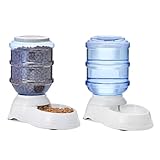
- Large food dispenser and water dispenser set for dog or cat; uses gravity to ensure a consistent supply
- 456.6fl.oz food feeder, 382.1 fl.oz water dispenser
- Anti-skid rubber feet on durable plastic base help ensure secure placement
3. Van Ness Auto Feeder for Cats
Best Simple Feeder for Small Cats
The Van Ness Auto Feeder is a straightforward gravity feeder for cat owners who don’t need anything fancy. Made in the USA from recyclable materials, it features a compact design that fits comfortably in smaller feeding areas without taking up much space.
Its high-polish, stain-resistant plastic is easy to wipe down, while the transparent food reservoir lets you see how much kibble is left without opening the container. It’s a practical option for keeping dry food available throughout the day, particularly if you’re caring for a single cat.
Key Features:
- High-polish, stain-resistant plastic construction
- Made in the USA using recyclable materials
- Transparent reservoir for monitoring food levels
- Compact, lightweight design
Pros:
- Lightweight construction using recyclable materials
- Clear container makes it easy to monitor remaining food
- Compact enough for apartments and smaller feeding areas
Cons:
- May tip over if placed on an uneven surface
- Smaller capacity requires more frequent refilling
Best For:
Cat owners with a single, smaller cat who want an inexpensive gravity feeder that doesn’t take up much room. Its compact size makes it particularly useful for apartments or homes where feeding space is limited.
Because the feeder is lightweight, placement matters. Keep it on a flat, stable surface where your cat won’t accidentally knock it over while eating. If your cat tends to push their bowl around, placing the feeder against a wall or on a non-slip feeding mat may help keep it in place.
The smaller reservoir also means you’ll need to refill it more often, but that can be an advantage if you prefer keeping your cat’s dry food fresh rather than storing large amounts in the feeder. For a single cat that eats relatively small portions, a compact feeder may actually be more practical than a large-capacity model.

- Medium 6 Pound Auto Feeder
- Ideally Sized for Large Dogs
- Removable Lid for Easy Cleaning of Food Container
4. Gardner Pet Gravity Feeder and Water Dispenser Set
Best for Stylish Homes
The Gardner Pet Gravity Feeder and Water Dispenser Set offers a more decorative alternative to basic plastic feeders. Its woodgrain-style finish blends into home interiors, while the gravity-fed design keeps dry food and water available without electricity.
Key Features:
- Matching food and water dispensers
- Woodgrain-style finish
- Stainless steel bowl components
- Gravity-fed operation without batteries or electricity
- Approximately 0.8-gallon capacity per dispenser
Pros:
- Attractive design for visible feeding areas
- Includes both food and water dispensers
- Stainless steel food bowl is easy to clean
- No electronic components to program
Cons:
- Requires more space than a single feeder
- Doesn’t control portions or feeding times
- Water-side bowl may be less convenient to remove for cleaning
Best For:
Cat owners who want a coordinated feeding station that looks good in a kitchen or living room while providing the convenience of gravity-fed food and water.
The matching design is a nice bonus, but you can still place the food and water dispensers apart if your cat prefers separate feeding and drinking areas.

- 【Automated Feeding & Watering】The 2-in-1 Automatic Feeder and water dispenser offer a seamless feeding and drinking experience for your pets. No need to worry about your pet’s meals during vacations and travels. It frees you from the worry of your pet’s hunger or thirst, allowing you to enjoy peace of mind while you’re out.
- 【Gravity-Fed Design with No Power Required】Gravity-fed design, when the pet finishes the food or water in the base, it will automatically replenishes. Requiring no power cords or batteries, which not only adds to its convenience but also enhances safety, making it a reliable choice for your pet’s feeding needs.
- 【0.8 Gallonx2 Capacity】With its large capacity, the feeder can hold enough food and water to last for days, even for larger pets. The water bowl can store 0.8 gallons of water, and the food dispenser can store 1.3kg of food, meeting the daily feeding needs as well as those during outings.
5. PetSafe Healthy Pet Food Station
Best Premium Gravity Feeder
The PetSafe Healthy Pet Food Station is a good option for cat owners who want something a little more durable and easier to maintain than a basic plastic feeder. It combines a BPA-free plastic food reservoir with a removable stainless steel bowl, making it a practical choice for anyone who prioritizes cleanliness.
The stainless steel bowl is rust-resistant and easy to sanitize, while the snap-on lid helps keep stored kibble protected and fresh. Its dishwasher-safe components also make regular cleaning more convenient, especially if you prefer not to scrub every part by hand.
Key Features:
- Removable stainless steel feeding bowl
- BPA-free plastic food reservoir
- Snap-on lid to help protect stored kibble
- Dishwasher-safe components for easier cleaning
Pros:
- Stainless steel bowl is hygienic, durable, and rust-resistant
- Secure lid helps protect food during storage
- Sturdy construction with quality materials
Cons:
- More expensive than basic plastic gravity feeders
- Bulkier design may take up additional floor space
Best For:
Cat owners who are willing to spend a little more for better materials, easier cleaning, and long-term durability. It’s particularly worth considering if you prefer stainless steel feeding bowls over plastic ones.
The removable bowl is one of its biggest advantages. Since that’s where your cat eats, being able to take it out and wash it thoroughly makes daily maintenance easier. Over time, dry food can leave behind oils and crumbs that aren’t always obvious at first glance, so having a bowl you can easily remove and clean is genuinely useful.
Just make sure you have enough room for the feeder, as its larger design may not be ideal for smaller feeding areas. If you’re deciding between this and a cheaper plastic model, consider how often you’ll be cleaning it. The added cost may be worthwhile if the removable stainless steel bowl makes that routine easier to maintain.

- Feed Any Time: Gravity feeder lets your pet eat food whenever they’re hungry
- Food Storage: Medium-sized dispenser holds 4 pounds of dog or cat food; small size holds 2 pounds
- Easy to Clean: Feeder comes apart easily and the stainless steel bowl is dishwasher safe
6. Little Giant Chow Hound Pet Feeder
Best for Outdoor or Garage Use
The Little Giant Chow Hound Pet Feeder is built for situations where a regular plastic gravity feeder might not hold up as well. Made from heavy-duty galvanized steel, it’s designed to withstand tougher conditions, making it a practical option for garages, enclosed porches, and other sheltered feeding areas.
Its large food capacity is particularly useful when feeding several cats, while the gravity-fed chute allows dry food to dispense without electricity. The sturdy metal construction also makes it a good choice if durability matters more to you than appearance.
Key Features:
- Heavy-duty galvanized steel construction
- Weather-resistant design for sheltered outdoor areas
- Gravity-fed chute designed to dispense food smoothly
- Optional wall-mounting capability
- Large food storage capacity
Pros:
- Extremely durable construction
- Well-suited for garages and sheltered outdoor feeding areas
- Large capacity reduces the need for frequent refilling
Cons:
- Industrial appearance may not suit indoor living spaces
- Metal construction can make food dispensing noticeably louder
Best For:
Cat owners who need a sturdy, high-capacity feeder for garages, enclosed porches, or sheltered outdoor feeding stations. It may also be useful for people caring for multiple outdoor cats or managed feral cat colonies.
One thing to consider is where you’ll place it. Although the galvanized steel construction offers better durability than many plastic feeders, keeping it in a sheltered location helps protect the stored food from moisture and harsh weather. For outdoor feeding stations, keeping the food dry is just as important as choosing a durable feeder. Even a sturdy metal container won’t prevent kibble from spoiling if moisture gets inside.
The metal chute may also produce more noise as kibble moves through it, which could bother cats that are sensitive to unfamiliar sounds. If you’re feeding outdoor or feral cats, placing the feeder somewhere quiet and protected may help them feel more comfortable approaching it.
If you’re caring for feral cats, consistency in feeder placement can make a difference. Cats that are cautious around people or unfamiliar objects may need time to get used to a new feeding station, so choosing a quiet location and leaving the feeder in the same spot can help them gradually become comfortable using it.

- AUTOMATIC FOOD DISPENSER – This steel automatic dog feeder stores dry dog food and feeds dogs from the same chew-proof container.
- DURABLE STEEL BODY – This pet food dispenser has a tough galvanized steel body for durability and rust resistance, making it great for both indoor and outdoor use.
- SECURES FOOD AGAINST PESTS – The feeders magnetized door to let dog in and keep pests out, its’ angled chute allows for controlled food flow.
7. PAWGETHER Gravity Cat Feeder
Best Travel-Friendly Feeder
The PAWGETHER Gravity Cat Feeder is a compact option for cat owners who want something easy to move and store. Its narrow design fits comfortably into smaller feeding areas, making it useful for apartments, limited counter space, or temporary feeding setups.
Despite its relatively small footprint, the feeder holds up to one gallon of dry food. The snap-on lid helps keep the contents secure, while its lightweight construction makes it convenient to move when needed.
Key Features:
- Narrow design that fits into tight spaces
- Snap-on lid to help secure stored food
- One-gallon food capacity
- Compact, portable construction
Pros:
- Lightweight and easy to move
- Space-saving design for smaller feeding areas
- Convenient for maintaining a food supply over one or two days
Cons:
- May become unstable when placed on carpet
- Less suitable for larger cats or multi-cat households
Best For:
Cat owners with smaller households or cats that eat relatively modest amounts of dry food. Its portable design also makes it worth considering for temporary feeding arrangements or short trips where space is limited.
Because the feeder has a narrow profile, it’s best placed on a flat, stable surface rather than thick carpeting. If your cat tends to push against their food bowl, a non-slip mat may help keep it from shifting.
If you’re planning to use this feeder in a temporary location, give your cat time to get comfortable with it before relying on it. Some cats are hesitant around unfamiliar feeding equipment, so introducing the feeder alongside their usual bowl can help make the transition easier.
Although the one-gallon reservoir can reduce how often you need to refill it, remember that a gravity feeder doesn’t replace daily care or someone checking on your cat while you’re away. It’s worth testing how reliably the food dispenses over a full day, especially if you plan to use it while someone else is caring for your cat.

- 𝐆𝐫𝐚𝐯𝐢𝐭𝐲-𝐟𝐞𝐝 𝐃𝐞𝐬𝐢𝐠𝐧 – No Electricity, No Timers, No Buttons, Always Full. The automatic cat feeder is designed to dispense food based on gravity. It will automatically refills the food bowl as your pet eats, ensuring they never go hungry
- 𝐌𝐚𝐱𝐢𝐦𝐢𝐳𝐞 𝐊𝐢𝐛𝐛𝐥𝐞 𝐅𝐫𝐞𝐬𝐡𝐧𝐞𝐬𝐬: Worried about food going stale? Our gravity cat feeder features a dedicated desiccant compartment INSIDE the seal-tight lid to actively absorb moisture, locking in peak freshness. Ensure your cat’s food stays perfectly dry and fresh. No more soggy food! (🌟NOTE: The desiccant bag is not included)
- 𝐒𝐢𝐳𝐞 𝐆𝐮𝐢𝐝𝐞 – Size of this pet feeder automatic is 7.6 x 10.6 x 11.7 inches (LxWxH) Don’t let your pet go hungry – invest in the Gravity Automatic Feeder today and enjoy the convenience of automatic food refills for your furry friend
Best Gravity Feeders for Multi-Cat Households
Feeding several cats can get complicated, especially when one eats faster than the others, guards the food bowl, or makes a mess during mealtime. A gravity feeder for a multi-cat household should have enough capacity to handle multiple appetites while remaining stable, easy to clean, and resistant to food jams.
Two options worth considering are the Petmate Replendish and the PetSafe Healthy Pet Food Station. Both offer features that can make feeding multiple cats more manageable, although the best choice depends on how comfortably your cats share food. It’s worth observing their usual feeding routine first, since cats that seem perfectly comfortable together may still prefer having their own space when eating.
Petmate Replendish Gravity Feeder (10 lb Size)
Best for Larger Food Capacity
The 10-pound Petmate Replendish is a practical option for households with two or three cats. Its larger reservoir means fewer refills, while the wide base and secure locking design help prevent spills when cats nudge or paw at the feeder.
Why It’s Worth Considering:
- 10-pound capacity reduces how often you need to refill the feeder.
- Microban® antimicrobial protection helps inhibit bacterial growth on treated surfaces.
- Wide, stable base helps reduce sliding and tipping.
- Dishwasher-safe base makes regular cleaning easier.
Best For:
Households with two or more cats that already share feeding areas comfortably, or homes where multiple feeders can be placed in different locations.
If your cats tend to crowd around the same bowl, consider placing two feeders in separate rooms. This gives each cat more opportunities to eat without being interrupted or pushed aside by another cat.
A larger food reservoir doesn’t necessarily mean you need fewer feeding stations. Even when there’s plenty of kibble available, a more confident cat may still prevent a timid one from approaching the bowl. Providing separate feeding areas can help avoid that problem.

- SET OF 2: Water and Food Feeding Set – This set includes a gravity automatic dog dry food feeder or treat dispenser and a gravity self water dispenser (food feeder * 1, water dispenser * 1)
- FEEDER: Enhanced Food Flow; Whisker Friendly; WATERER: Advanced water filtration; Antimicrobial Bowl
- BIG AND WIDE MOUTH BOWL: Maintains constant food level; Gives you peace of mind with its automatic refills
PetSafe Healthy Pet Food Station (Large)
Best for Easy Cleaning and Hygiene
The large PetSafe Healthy Pet Food Station is a good choice for cat owners who prioritize cleanliness. Its removable stainless steel bowl is easy to wash and resists odors, which can be particularly useful when several cats regularly eat from the same feeding station.
The large model holds up to four pounds of dry food, while the snap-on lid helps protect the kibble stored inside.
Why It’s Worth Considering:
- Four-pound food capacity provides storage for multiple cats.
- Removable stainless steel bowl is durable, easy to sanitize, and resistant to lingering odors.
- Snap-on lid helps protect stored food from exposure.
- Easy-to-clean design makes regular maintenance more convenient.
Best For:
Multi-cat households where keeping feeding equipment clean is a priority, particularly when cats have food sensitivities or health concerns that require extra attention to hygiene.
The removable bowl is especially convenient because you can wash it thoroughly without having to clean the entire reservoir every time. When several cats eat from the same bowl, food crumbs and oils can accumulate quickly, so having a bowl that’s easy to remove makes regular cleaning less of a chore.
However, if one of your cats has a weakened immune system or requires a special diet, ask your veterinarian whether shared feeding is appropriate.

- Automatic Food Dispenser: The PetSafe Healthy Pet Food Station has a gravity refill system that offers pets continuous access to dry food for comfortable eating; small holds up to 2 lb of kibble and medium holds up to 4 lb of kibble
- Automatic Hydration for Your Pet: The PetSafe Healthy Pet Water Station provides consistent, self-serve access to water using a gravity water dispenser and BPA-free container; small holds 64 oz of water and medium holds 128 oz of water
- Clean & Convenient Eating and Drinking Bowl: Features a removable dishwasher-safe bowl made of stainless steel for easy cleaning and better pet hygiene
Tips for Using Gravity Feeders in Multi-Cat Homes
Even a well-designed gravity feeder won’t solve every feeding problem. How you arrange your feeding stations can be just as important as the feeder itself.
- Provide enough feeding stations. Aim for at least one feeder for every two cats, and add more if you notice competition or food guarding.
- Separate feeding locations. Placing feeders in different rooms can help cats eat without feeling crowded or threatened.
- Monitor food intake and weight. If one or more cats begin gaining excess weight, consider switching to scheduled meals with measured portions.
- Be careful with restricted diets. Gravity feeders generally aren’t suitable for shared feeding when one cat needs prescription food or strict portion control.
Pay attention to how your cats behave around food rather than assuming they’re comfortable sharing simply because they aren’t fighting. A cat that consistently waits until the others finish eating may benefit from having a separate feeding station.
One useful habit is to watch your cats during a few normal feeding sessions. Notice who approaches the food first, whether anyone gets pushed aside, and if certain cats seem reluctant to eat while others are nearby. These small observations can help you decide whether shared gravity feeders are appropriate or if separate feeding arrangements would work better.
The goal is to make food accessible without creating unnecessary competition. For some multi-cat households, that means using several gravity feeders. For others, individual meals and separate feeding areas may be the better solution.
Are Gravity Feeders Safe for Cats?
Gravity feeders are generally safe for cats, but that doesn’t mean they’re the right choice for every household. Some cats are perfectly happy eating small amounts throughout the day, while others will finish whatever food is available, even when they’re no longer hungry.
Whether a gravity feeder works for your cat depends on their eating habits, overall health, and any dietary restrictions. Before making the switch, pay attention to what your cat does when food is left in their bowl. Their normal eating behavior can tell you quite a bit about whether free-feeding is likely to work.
When Gravity Feeders Are Safe and Beneficial
Gravity feeders tend to work best in situations where cats can manage their own food intake without overeating.
They may be a good choice for:
- Healthy adult cats that naturally eat small portions throughout the day.
- Cats with consistent eating habits, provided their daily food intake is monitored.
- Households with peaceful feeding routines, where cats aren’t competing for food.
- Dry food feeding, since gravity feeders aren’t designed to safely store wet food.
- Backup feeding arrangements that provide extra dry food when an owner’s schedule changes unexpectedly.
A smaller-capacity feeder can help limit how much food is stored, although it won’t prevent a cat from eating too much at once.
Gravity feeders can also provide some reassurance when you’re working late or away from home for a short period. However, they shouldn’t replace daily care, fresh water, or someone checking on your cat when you’re traveling.
If your cat already eats a little at a time and walks away when satisfied, a gravity feeder may fit naturally into their routine. The important thing is to make sure their eating habits remain consistent once food becomes continuously available.
When to Be Cautious
Gravity feeders have some limitations that are worth considering before making them part of your cat’s daily routine.
1. Overeating and Weight Gain
Not every cat knows when to stop eating. Some will continue snacking out of boredom, stress, or simply because food is available.
For cats prone to overeating, unrestricted access to kibble can make weight management difficult and increase the risk of obesity.
If your cat tends to empty their bowl immediately after being fed, a gravity feeder probably isn’t the best choice. Scheduled meals with measured portions offer better control over how much they eat.
One thing to watch for is gradual weight gain. A cat might appear to be eating normally, but having access to extra kibble throughout the day can add more calories than you realize.
2. Medical Conditions and Special Diets
Cats with diabetes, urinary problems, or other health conditions may need carefully managed diets and feeding schedules.
Gravity feeders don’t provide precise portion control, which can make it difficult to follow veterinary feeding recommendations. They can also create problems in multi-cat households if one cat requires prescription food while the others eat a regular diet.
If your cat has a medical condition that affects their feeding requirements, consult your veterinarian before switching to a gravity feeder.
In a multi-cat home, it’s also difficult to know exactly how much each cat is eating from a shared feeder. This becomes particularly important when you’re trying to monitor a sick cat’s appetite or make sure they’re receiving enough food.
One of the biggest advantages of scheduled feeding became clear to me when Diba got sick. She had always been the cat who loved food and finished everyone else’s leftovers, so when she suddenly started turning away from her meals, I immediately knew something was wrong. Because I was used to watching my cats eat, I could recognize that change instead of overlooking it. That experience made me appreciate how important it is to know each cat’s normal appetite, especially when caring for multiple cats.
3. Food Freshness and Hygiene
One downside of larger gravity feeders is that dry food can remain in the reservoir for extended periods.
This becomes more concerning in warm or humid environments, where improper storage may contribute to:
- Stale or rancid kibble that loses its freshness.
- Mold growth if moisture enters the container.
- Pest problems when food is left accessible for too long.
A large reservoir may save you time on refills, but that convenience isn’t particularly useful if the food becomes stale before your cat finishes it.
Rather than automatically filling the reservoir to the top, consider adding only what your cat will reasonably eat within a shorter period. This makes it easier to rotate fresh food and inspect the container regularly.
Safety Tips for Using Gravity Feeders
A few simple habits can help keep your cat’s gravity feeder clean and functioning properly.
- Clean the feeder at least weekly. Wash the bowl and food reservoir with warm, soapy water, following the manufacturer’s cleaning instructions. Allow everything to dry completely before refilling.
- Use dry kibble only. Wet food can spoil quickly when left at room temperature and isn’t suitable for standard gravity feeders.
- Choose a cool, dry location. Keep the feeder away from direct sunlight, excessive heat, and damp areas.
- Check the food daily. Make sure kibble is dispensing properly and look for signs of moisture, contamination, or blockages.
- Choose food-safe materials. BPA-free plastic and other food-grade materials are good options for everyday feeding.
It’s also worth keeping track of how much food your cat actually consumes. A constantly available food supply can make changes in appetite harder to notice, especially when multiple cats share the same feeder.
A simple habit is to check the feeder whenever you refresh your cat’s water. It only takes a moment to confirm that food is flowing properly and that nothing looks or smells unusual.
So, Are Gravity Feeders Worth Using?
For healthy cats that naturally regulate their food intake, gravity feeders can be a convenient and reliable way to keep dry food available throughout the day.
However, convenience shouldn’t come at the expense of portion control or your cat’s health. If your cat overeats, requires a special diet, or needs carefully scheduled meals, a programmable feeder or traditional measured feeding routine may be more appropriate.
The most important thing is to choose a feeding method that suits your cat’s individual needs. A gravity feeder can make your daily routine easier, but it’s still up to you to monitor their eating habits, weight, and overall well-being.
Tips for Introducing a Gravity Feeder to Your Cat
Switching from a regular food bowl to a gravity feeder might seem like a small change, but some cats are cautious around anything unfamiliar. A new container, different bowl shape, or even a change in feeding location can make them hesitant to eat.
The easiest approach is to introduce the feeder gradually while keeping the rest of your cat’s feeding routine as familiar as possible. Even if your cat is usually confident around new objects, it’s worth giving them a chance to investigate the feeder before expecting them to eat from it.
1. Start with Familiar Food
Stick with the same dry kibble your cat already enjoys. Changing both the food and the feeder at once can make the transition more difficult, especially for picky eaters.
Using familiar food lets your cat get comfortable with the new feeding setup without also adjusting to a different taste, smell, or texture.
If your cat refuses to eat from the feeder, you’ll also have a better idea of what’s causing the hesitation. Since the food hasn’t changed, you can focus on helping them become comfortable with the new bowl rather than wondering whether they dislike the kibble.
2. Let Your Cat Explore the Feeder First
Before filling the feeder, place it in your chosen feeding area for a day or two. Give your cat time to sniff it, investigate its shape, and become familiar with its presence.
Some cats may approach it immediately, while others prefer to observe from a distance. There’s no need to rush them.
Allowing your cat to explore the feeder without pressure can make it less intimidating when you eventually add food. If your cat seems nervous, simply leave the feeder nearby and continue their normal routine. Sometimes the best way to introduce something new is to let your cat realize on their own that it isn’t a threat.
3. Transition Gradually from the Old Bowl
Rather than removing your cat’s regular bowl immediately, let them get used to eating from both.
Over the first few days:
- Start with both bowls. Offer some of your cat’s usual dry food in their regular bowl and a small amount in the gravity feeder.
- Gradually shift the food. As your cat becomes comfortable, reduce the amount offered in the old bowl while encouraging them to eat from the new feeder.
- Remove the old bowl when they’re ready. Once your cat consistently eats from the gravity feeder without hesitation, you can complete the transition.
Keep track of the total amount of food you’re offering during this process, particularly if your cat tends to overeat.
Don’t worry if your cat continues choosing their old bowl at first. Familiarity can be comforting, and allowing them to switch between the two gives them some control over the transition.
4. Encourage Exploration with Treats
If your cat seems unsure about the new feeder, a few familiar treats can help make it more appealing.
Try placing a small amount of their favorite dry kibble or a couple of treats directly in the feeding tray. This gives them a reason to approach, sniff, and investigate the new bowl.
Avoid forcing your cat toward the feeder. Letting them discover the food on their own can help build a more positive association.
You don’t need to use many treats, either. A few pieces of something your cat already enjoys may be enough to encourage that first interaction. Once they’re comfortable approaching the feeder, you can gradually stop using treats.
5. Watch Their Eating Habits
Pay attention to how much your cat eats during the first several days.
Some cats may initially eat less because they’re uncomfortable with the change. Others might start eating more once they realize food is continuously available.
Watch for:
- Changes in how much food your cat consumes
- Hesitation or nervousness around the feeder
- Excessive eating or frequent visits to the food bowl
Monitor their food intake closely during the transition. If your cat starts overeating, you may need to reconsider whether unrestricted feeding is appropriate. If they refuse food or eat substantially less than normal, return to a familiar feeding setup and contact your veterinarian promptly.
Try measuring how much kibble you put into the feeder and checking how much remains at the end of the day. This gives you a clearer picture of their eating habits instead of relying on whether the bowl looks full or empty.
6. Keep the Feeder in a Consistent Location
Cats often feel more comfortable when their feeding environment stays predictable.
Choose a quiet, accessible location away from litter boxes, noisy appliances, and areas with frequent foot traffic.
Once your cat starts using the gravity feeder comfortably, try to keep it in the same spot. Moving it repeatedly may create unnecessary confusion, particularly for cats that are sensitive to changes in their surroundings.
If possible, place the new feeder near your cat’s usual feeding spot during the transition. Keeping the location familiar means your cat only has to adjust to the feeder itself rather than learning an entirely new feeding routine.
My cats have always had their own opinions about where they want to eat. Diba usually ate in the same place, but Cornelius and Baby sometimes lead me to completely different spots, whether that’s where I prepared their food, inside a box, or even in another room. If I leave their food somewhere else, they’ll sometimes wait for me to bring it over. Apparently, they’ve gotten quite used to having their personal servant deliver their meals! It’s a funny reminder that a feeding location that’s convenient for us isn’t necessarily where our cats feel most comfortable.
Give Your Cat Time to Adjust
Some cats will start using a gravity feeder almost immediately, while others may need several days to feel comfortable.
There’s no reason to rush the process. Keeping their usual food, allowing them to explore at their own pace, and maintaining a consistent feeding location can make the transition easier.
The goal is to help your cat feel comfortable eating from the new feeder, not simply to get them using it as quickly as possible. A little patience at the beginning can prevent unnecessary feeding problems later.
Final Thoughts: Is a Gravity Feeder Right for Your Cat?
A gravity feeder can make daily feeding more convenient, but the most important question is whether it suits your cat’s eating habits.
If your cat is healthy, eats small amounts throughout the day, and doesn’t tend to overeat, a gravity feeder may be a practical way to keep dry food available. It can be especially useful for busy households or owners who prefer a simple feeding system without timers or electronics.
However, if your cat eats everything in sight, needs measured portions, or follows a special diet, a gravity feeder probably isn’t the best choice. A programmable feeder or scheduled meals will give you more control over how much and when your cat eats.
Before committing to a gravity feeder, consider a few practical steps:
- Observe your cat’s eating habits. Do they naturally stop when they’re full, or do they finish whatever you give them?
- Monitor their food intake and weight. Make sure constant access to kibble isn’t leading to overeating.
- Keep the feeder clean and check it daily. Food can become stale, and kibble can occasionally get stuck.
- Consider your other cats. In multi-cat households, separate feeding stations may help prevent competition and make eating more comfortable.
- Don’t rely on it as a replacement for daily care. Even with a full feeder, your cat still needs fresh water, attention, and someone checking on their well-being.
One thing worth remembering is that a full food bowl doesn’t necessarily mean your cat is eating enough. This is particularly important in multi-cat households, where one cat may eat more than the others, making it difficult to notice when another cat’s appetite changes.
My advice is to choose a feeding method based on your cat’s needs rather than how much time it saves you. A gravity feeder should make your routine easier without making it harder to notice changes in your cat’s appetite or health.
Personally, I would still choose scheduled meals over a gravity feeder. They’ve worked well for my cats, helped me maintain their feeding routine, and made it easier to notice when someone wasn’t eating normally. That said, I understand why gravity feeders appeal to people with busier schedules. I think the important thing is finding a feeding arrangement that works for both your daily routine and your cat’s individual eating habits.
If you decide to try one, start gradually, pay attention to how your cat responds, and be willing to switch back to measured meals if free-feeding doesn’t work for them. Even something as simple as checking how much food disappears each day can help you spot changes before they become more serious.
Find the Perfect Gravity Feeder for Your Cat Today
Ready to upgrade your cat’s feeding routine? A well-chosen gravity feeder can simplify your day, keep your feline friend consistently fed, and reduce stress—both for you and your pet.
Browse our top picks above to find the right model for your cat’s needs, whether you’re feeding a single kitty or a full clowder.
Recommended Next Reads:
- Automatic Feeders vs. Gravity Feeders: What’s Better for Your Cat?
- Best Litter Mats to Keep Your Floors Clean: Top Picks for Cat Owners
- Best Cat Trees for Apartments (2026 Update) – Compact, Stylish & Functional
Shop Featured Products:
- Petmate Replendish Gravity Feeder on Amazon
- PetSafe Healthy Pet Station on Amazon
- Frisco Gravity Feeder on Amazon
By combining the low-tech reliability of a gravity feeder with a little planning, you can ensure your cat stays fed, happy, and healthy—even on your busiest days.
Disclaimer: The information provided on this site is for general informational purposes only. It is not intended as veterinary advice, diagnosis, or treatment. Always seek the guidance of a licensed veterinarian before making decisions about your pet’s health.
Results Disclaimer: Results may vary. Our recommendations are based on editorial research and do not guarantee specific outcomes.
Accuracy Notice: We strive to keep content accurate and up to date. However, always verify current information and consult a veterinarian for personalized guidance.

James Kim is the founder of SavingNineLives.com, a passion project dedicated to improving the lives of rescue cats through practical care tips, adoption guides, and heartfelt advocacy. Though not a veterinarian, James is a lifelong cat lover who collaborates with animal welfare volunteers, rescue shelters, and vet-reviewed sources to ensure accurate, trustworthy information. His mission is simple: to help cat parents make informed, compassionate decisions that support feline health and well-being.
When he’s not writing, James is busy fostering cats, volunteering at local shelters, and testing cat-friendly products to recommend only the best to readers. Every article on this site is carefully researched and reviewed to meet the highest standards for cat health content.
Experience: 10+ years of hands-on experience with rescue cats
Content Vetting: Collaborates with vet techs and rescue workers
Trust & Transparency: All products and advice are shared with affiliate disclosures and reader safety in mind
Follow James and the Saving Nine Lives journey as we help one rescue cat at a time.