
Best Cat Carriers for Nervous Cats: Safe, Stress-Free Travel Options for Anxious Felines
Last Updated on January 1, 2026 by James Kim
Affiliate Disclosure:
This post may contain affiliate links. If you click through and make a purchase, I may earn a small commission at no extra cost to you. As an Amazon Associate I earn from qualifying purchases. I only recommend products I believe bring genuine value. Thank you for supporting this site.
Note: This article is for informational purposes only and is not a substitute for professional veterinary advice. Always consult your vet for your cat’s specific needs.
Traveling with a Nervous Cat? Here’s What You Need to Know
If you’ve ever tried to get your cat into a carrier—only to be met with wide eyes, frantic scratching, or desperate meows—you’re not alone. Many cat owners dread trips to the vet, groomer, or even a simple car ride, all because their feline companion gets anxious at just the sight of a carrier. For nervous cats, travel can be a deeply distressing experience.
But the good news? The right cat carrier can make all the difference.
Whether your cat hides at the jingle of car keys or turns into a tiny tornado when you try to zip the carrier shut, choosing a carrier designed specifically with anxious cats in mind can transform stressful travel into a calm, secure experience—for both of you. From soft-sided cocoons to top-loading designs that reduce struggle, modern carriers are built to support the unique emotional needs of nervous felines.
In this guide, you’ll discover the best cat carriers for nervous cats, based on real user experiences, expert recommendations, and cat behavioral insights. You’ll also learn practical tips for calming your kitty before and during travel—so you can both breathe easier on the road.
Let’s dive in.
Why Some Cats Get Nervous in Carriers
Cats are creatures of habit. Even small changes to their environment can trigger stress—and nothing disrupts their routine quite like being placed in a carrier and taken away from home. Understanding why your cat reacts with fear or anxiety is the first step in choosing the right carrier and making travel less traumatic.
Common Causes of Cat Carrier Anxiety:
- Negative associations: If your cat only sees the carrier when it’s time for a vet visit, they’ll associate it with fear, pain, or confinement.
- Lack of familiarity: A carrier that’s suddenly pulled out before travel is an unfamiliar and untrusted object.
- Motion sensitivity: The rocking and bumping of a car ride can be unsettling, especially if they can see the world whizzing by.
- Noise and smells: Traffic sounds, engine noise, and unfamiliar odors from the carrier can all be overstimulating.
- Limited escape options: Cats instinctively seek control and safety. Being zipped into a small space without an “out” can make them feel trapped.
Signs Your Cat Is Stressed in a Carrier:
- Loud, persistent meowing or yowling
- Panting or drooling
- Shaking or trembling
- Excessive grooming or fur shedding
- Attempts to escape, clawing, or biting
- Vomiting or urinating in the carrier
Recognizing these signs is key to understanding just how uncomfortable your cat might be—and why choosing a calming, secure carrier is more than just a convenience. It’s an essential part of responsible and compassionate cat care.
Key Features to Look For in a Carrier for Nervous Cats
When shopping for a cat carrier, especially for an anxious or easily frightened feline, not all designs are created equal. The ideal carrier should offer not just physical safety—but also emotional comfort. Nervous cats benefit from carriers that feel secure, reduce sensory overload, and make handling easier for you.
Here’s a breakdown of the most important features to prioritize:
1. Ventilation and Visibility (But Not Too Much)
- Why it matters: Good airflow is essential for your cat’s safety and comfort during travel.
- Pro tip: Choose a carrier with mesh windows or ventilation panels that give your cat some visibility without exposing them to overwhelming visual stimuli. Some cats feel safer when partially covered.
2. Soft-Sided vs. Hard-Sided Carriers
- Soft-sided: Lightweight, cozy, and often more comforting for cats who prefer snug spaces. Great for short trips and cats that don’t try to claw their way out.
- Hard-sided: Durable and escape-proof, ideal for cats who get aggressive or destructive when stressed. Easy to clean if accidents happen.
- Best choice: A soft-sided carrier with a firm frame or a hybrid that offers comfort and security.
3. Secure Closures (Zippers, Locks, Latches)
- Nervous cats often try to push or claw their way out. Look for carriers with:
- Locking zippers
- Reinforced seams
- Escape-proof latches
- Avoid carriers with flimsy or weak fastenings—they’re a liability when your cat panics.
4. Size and Shape: Roomy but Cozy
- A carrier that’s too small can be claustrophobic, while one that’s too large can make your cat feel unstable.
- Look for a carrier that lets your cat stand, turn around, and lie down comfortably, without excess space.
5. Interior Comfort (Padding and Familiar Scents)
- Choose a model with a padded or fleece-lined bottom for extra coziness.
- Tip: Place a blanket or towel with your cat’s scent inside for calming reassurance.
6. Top-Loading or Multi-Entry Access
- Front-loading carriers can make it hard to place a resisting cat inside.
- Top-loading options or dual-entry designs reduce stress and struggle—for both you and your cat.
7. Noise-Reducing Design
- Zippers that don’t screech, flexible fabric that doesn’t crinkle, and sturdy materials that don’t rattle all help minimize fear-triggering sounds during transport.
By focusing on these design features, you’ll not only make your cat’s experience less stressful—you’ll also protect yourself from scratches, bites, and carrier battles. In the next section, we’ll look at some of the top-rated cat carriers on the market that meet these standards and are loved by owners of anxious cats.
Best Cat Carriers for Nervous Cats (Top Picks)
We’ve researched and reviewed some of the most highly recommended cat carriers specifically suited for nervous, anxious, or travel-resistant cats. Each of these options offers a blend of comfort, security, and thoughtful design features to help reduce your cat’s stress during transport.
1. Sherpa Original Deluxe Pet Carrier
Best for: Airline travel and everyday use
- Type: Soft-sided
- Size options: Small, Medium, Large
- Top features:
- Mesh ventilation on all sides
- Faux lambskin liner (removable and washable)
- Top and side entry options
- Spring wire frame fits under most airplane seats
- Why it’s great for nervous cats: The soft interior and semi-enclosed space create a cozy, den-like environment that helps anxious cats feel safe.
- Bonus: Approved by most major airlines.
- Check on Amazon!

- FITS ON OR UNDER SEATS: Our patented spring wire frame allows the rear end of the carrier to be pushed down several inches, easily fitting in cars and conforming to under-seat requirements of domestic rail travel
- PERFECT FOR TRAVEL: Features mesh panels for ventilation, escape-proof locking zippers, top and side entries for easy and comfortable loading, waterproof interior base, and a removable machine washable cozy base liner
- VERSATILE DESIGN: Can be carried by hand with the padded top handle, or over the shoulder using the included detachable carrying strap and integrated metal D-rings – whichever suits your comfort and convenience
2. PetLuv Happy Cat Premium Carrier
Best for: Home crate training and nervous first-timers
- Type: Soft-sided, extra roomy
- Dimensions: Up to 20 lbs capacity
- Top features:
- Four mesh windows for adjustable visibility
- Locking zippers to prevent escapes
- Removable plush pillow bed
- Converts into a “mobile cat room” when unzipped
- Why it’s great for nervous cats: Its large size and soft comfort create a secure space cats can get used to at home before trips. Perfect for desensitizing fearful cats to the carrier.
- Check on Amazon!

- ADJUSTABLE VISIBILITY WINDOWS: The PetLuv soft sided cat and dog carrier features 3 window modes with privacy flaps to create a fully open-access setup for home use, a breathable mesh environment for visibility, or a private, cozy interior for indoor, outdoor, and car travel
- LUXURY, ESCAPE-RESISTANT BUILD: Includes a 2″ plush removable pillow and double-stitched locking zippers pair with a rigid metal frame that holds shape better than wire-frame carriers during car travel and vet visits
- 4 EASY ACCESS DOORS: Top entry plus 3 side doors allow easier loading and removal at home, during travel, or vet visits, while also providing nearly all-around visibility for your pet
3. Sleepypod Mobile Pet Bed
Best for: Cats that hate being moved or touched during travel
- Type: Rigid soft-sided, doubles as a bed
- Size: For pets up to 15 lbs
- Top features:
- 360° dome zipper design
- Ultra-padded, removable bedding
- Entire base can be used as a regular cat bed
- Crash-tested for car safety
- Why it’s great for nervous cats: You can use it daily as a sleeping spot, so your cat is already comfortable inside when it’s time to travel. This reduces resistance and stress during transport.
- Check on Amazon!
No products found.
4. Henkelion Soft-Sided Travel Carrier
Best for: Budget-conscious cat owners who still want quality
- Type: Soft-sided
- Weight limit: Up to 15 lbs
- Top features:
- Lightweight and easy to carry
- Breathable mesh on all sides
- Adjustable shoulder strap
- Foldable for storage
- Why it’s great for nervous cats: While budget-friendly, it offers excellent visibility and comfort for short trips like vet visits.
- Check on Amazon!

- NOT AIRLINE APPROVED – The large pet carrier is only suitable for daily travel, car seat journey and pet hospital etc. Do not place it under an airplane seat
- SAFETY DESIGN – The adjustable shoulder strap help you hands-free carrying and makes it the most safe and convenient pet carrier bag for your travel
- DURABLE – This cat carrier is made of durable and lightweight polyester fabric. The four-side mesh will not only give a safe and comfortable travel for your pet, but also easy for you to check on your pet
5. Amazon Basics Two-Door Top-Load Hard-Sided Carrier
Best for: Cats that resist or panic when being inserted
- Type: Hard-sided plastic
- Entry: Front and top
- Top features:
- Durable and escape-proof
- Steel wire front door, secure latches
- Top-loading design eases the struggle of placing your cat inside
- Why it’s great for nervous cats: Top-loading access allows for quick, gentle placement without tipping the carrier. Also ideal for cats that get destructive in soft-sided carriers.
- Check on Amazon!
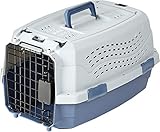
- Hard sided pet carrier with 2 doors for front and top entry; suitable for cat or extra-small dog breeds, such as chihuahuas and toy poodles (up to 11 pounds)
- Durable plastic construction with steel wire front door; screws keep the top and bottom sections securely connected
- Top door can swing open to the left or right for easy access and convenience
Comparison Summary Table:
| Carrier | Type | Weight Limit | Entry Points | Best For |
|---|---|---|---|---|
| Sherpa Deluxe | Soft | Up to 22 lbs | Top + Side | Travel, airline approved |
| PetLuv | Soft | Up to 20 lbs | Side + Top | Home desensitization |
| Sleepypod | Rigid Soft | Up to 15 lbs | Dome Zip | High-stress cats |
| Henkelion | Soft | Up to 15 lbs | Side | Budget-friendly |
| Amazon Basics | Hard | Up to 20 lbs | Top + Front | Escape-prone cats |
Bonus Tips to Calm a Nervous Cat During Travel
Even the best carrier won’t magically eliminate your cat’s travel anxiety. But when combined with the right strategies, it can become a safe, familiar space instead of a dreaded box. These calming techniques will help your nervous cat feel more secure during every stage of the journey.
1. Use a Pheromone Spray Like Feliway
- Spray the interior of the carrier 15–30 minutes before placing your cat inside.
- Feliway mimics natural feline calming pheromones and has been clinically shown to reduce stress.
- Don’t spray directly on your cat—just inside the carrier on bedding or walls.
2. Add Familiar Scents
- Place an unwashed T-shirt of yours, a favorite blanket, or a used towel inside the carrier.
- Familiar smells can offer strong comfort and reduce panic responses.
3. Block Out Stressful Sights and Sounds
- Drape a lightweight, breathable towel over the carrier during transport.
- This helps minimize visual stimulation and creates a dark, cave-like safe zone.
4. Leave the Carrier Out at Home (Don’t Hide It!)
- Make the carrier a regular part of your cat’s environment—not just something that shows up before traumatic trips.
- Keep it open, clean, and filled with soft bedding.
- Occasionally toss in treats or catnip to build positive associations.
5. Practice Short, Low-Stress Trips
- Do brief car rides without a destination at first.
- Start with 1–2 minute drives around the block, then build up gradually.
- Reward your cat afterward with treats, brushing, or playtime.
6. Stay Calm Yourself
- Cats are incredibly sensitive to human emotions.
- Speak softly, move slowly, and avoid sudden reactions when handling the carrier.
- If you’re anxious, your cat will likely mirror that tension.
7. Ask Your Vet About Natural Calming Aids
- For extreme anxiety, consider natural supplements (like L-theanine or CBD for pets) or short-term prescription medications—but always under a vet’s supervision.
By using these tips consistently, you can retrain your cat’s perception of the carrier. What was once a symbol of fear can become a place of comfort and trust—making travel smoother for both of you.
Frequently Asked Questions (FAQs)
How do I get my anxious cat into a carrier without a fight?
Start by placing the carrier in a familiar space days before your trip. Leave it open with soft bedding, treats, or toys inside. On travel day, use a top-loading or dual-entry carrier for easier placement. Remain calm, use gentle handling, and never force your cat in too quickly. Wrapping your cat gently in a towel (like a “purrito”) can also help reduce scratching and panic during the process.
Are hard carriers better than soft ones for nervous cats?
It depends on your cat’s behavior. Hard carriers offer more security and durability—ideal for cats who lash out, claw, or try to escape. Soft-sided carriers, on the other hand, tend to feel more cozy and den-like, which can be calming for cats who crave comfort. If your cat is extremely fearful or aggressive, a hard-sided carrier with top access is often the safest bet.
Can I give my cat something to calm them down before travel?
Yes, but always consult your veterinarian first. Options include natural calming aids like pheromone sprays, L-theanine, CBD for pets, or calming collars. For cats with extreme anxiety, your vet may prescribe anti-anxiety medication or a mild sedative for travel days.
How can I clean a carrier if my cat soils it from stress?
Choose a carrier with removable, washable liners or plastic interiors for easy cleaning. Use a pet-safe enzymatic cleaner to remove odors and stains. If your cat soils a soft-sided carrier, remove all padding and wash according to the manufacturer’s instructions. Let the carrier dry completely before using it again to prevent mold and lingering smells.
How early should I prepare the carrier before a trip?
Ideally, the carrier should always be available in your home—so your cat doesn’t associate it only with travel. If that’s not possible, introduce it at least 3–5 days before your trip, leave it open with treats or toys inside, and allow your cat to explore it at their own pace.
Conclusion: Help Your Nervous Cat Travel Calmly and Safely
A trip to the vet, a weekend getaway, or even a cross-country move doesn’t have to be a traumatic experience for your cat—or for you. With the right carrier, a few calming techniques, and some thoughtful preparation, even the most nervous felines can feel safe and secure during travel.
In this guide, we’ve covered:
- Why cats get anxious in carriers
- What features matter most when choosing a carrier for a fearful cat
- The best-reviewed cat carriers for nervous travelers
- Proven tips to ease your cat’s stress before and during the trip
- Answers to common questions every cat parent has
Choosing the best carrier is more than just a convenience—it’s an act of care and compassion for your feline friend. Whether your cat is a scared rescue or simply a creature of habit, the right gear and approach can help them feel more confident and less fearful on the go.
Take the Next Step Toward Stress-Free Travel With Your Cat
If you’re ready to ditch the drama and make every vet visit, road trip, or flight easier on your nervous cat, the time to act is now.
Choose one of our top-rated calming cat carriers:
From cozy soft-sided options like the Sherpa Original Deluxe to ultra-secure designs like the Amazon Basics Top-Load Carrier, there’s a solution tailored to your cat’s unique needs.
Pair it with stress-reducing tools:
Spritz a bit of Feliway pheromone spray in the carrier before travel, or check out our Cat Calming Products Guide for more feline-friendly solutions.
Want to prepare even more?
Read our popular guides:
- How to Introduce a Cat to a New Carrier
- How to Help Your Cat Feel Safe at the Vet
- Grooming Products You Should Avoid for Cats
Disclaimer: The information provided on this site is for general informational purposes only. It is not intended as veterinary advice, diagnosis, or treatment. Always seek the guidance of a licensed veterinarian before making decisions about your pet’s health.
Results Disclaimer: Results may vary. Our recommendations are based on editorial research and do not guarantee specific outcomes.
Accuracy Notice: We strive to keep content accurate and up to date. However, always verify current information and consult a veterinarian for personalized guidance.

James Kim is the founder of SavingNineLives.com, a passion project dedicated to improving the lives of rescue cats through practical care tips, adoption guides, and heartfelt advocacy. Though not a veterinarian, James is a lifelong cat lover who collaborates with animal welfare volunteers, rescue shelters, and vet-reviewed sources to ensure accurate, trustworthy information. His mission is simple: to help cat parents make informed, compassionate decisions that support feline health and well-being.
When he’s not writing, James is busy fostering cats, volunteering at local shelters, and testing cat-friendly products to recommend only the best to readers. Every article on this site is carefully researched and reviewed to meet the highest standards for cat health content.
Experience: 10+ years of hands-on experience with rescue cats
Content Vetting: Collaborates with vet techs and rescue workers
Trust & Transparency: All products and advice are shared with affiliate disclosures and reader safety in mind
Follow James and the Saving Nine Lives journey as we help one rescue cat at a time.